Yoga for Beginners at Home: 12 Easy Poses and a Simple 20-Minute Routine
You do not need a studio, expensive clothes or a flexible body to start yoga. All you need is a little floor space and a few minutes a day. This guide to yoga for beginners at home will show you what you need, the easiest poses to learn first and a simple routine you can follow from day one.
Benefits of Doing Yoga at Home
- Better flexibility and mobility: gentle stretching loosens tight hips, hamstrings and shoulders.
- Stronger muscles: holding poses builds strength in the core, legs and arms.
- Less stress: slow breathing calms the mind and can help you relax.
- Improved posture and balance: useful if you sit at a desk all day.
- Convenience: no travel, no fees and you can practise whenever it suits you.
What You Need to Get Started
- A yoga mat: a non-slip mat is helpful, but a carpet or folded blanket works to begin with.
- Comfortable clothes: anything that lets you stretch freely.
- A quiet space: enough room to stretch your arms and legs in every direction.
- Optional props: a firm cushion, a couple of thick books (as blocks) and a belt or scarf (as a strap).
Basic Yoga Breathing
Breathing is the foundation of yoga. Breathe in and out slowly through your nose. Let your belly expand as you inhale and gently draw in as you exhale. Try to keep the breath smooth and steady in every pose. If you find yourself holding your breath, ease off a little.
12 Easy Yoga Poses for Beginners
1. Mountain Pose (Tadasana)
Stand with feet hip-width apart, arms by your sides. Spread your toes, lengthen your spine and relax your shoulders. It looks simple, but it teaches good posture and body awareness. Hold for 5 slow breaths.
2. Child’s Pose (Balasana)
Kneel, sit back on your heels and fold forward, resting your forehead on the mat with arms stretched in front or by your sides. This is a resting pose you can return to any time you need a break. Hold for 5–10 breaths.
3. Cat-Cow Stretch (Marjaryasana-Bitilasana)
Start on hands and knees. As you inhale, drop your belly and lift your chest (cow). As you exhale, round your back and tuck your chin (cat). Move slowly for 8–10 rounds to warm up the spine.
4. Downward-Facing Dog (Adho Mukha Svanasana)
From hands and knees, tuck your toes and lift your hips up and back to form an upside-down V. Keep your knees bent if your hamstrings are tight. Focus on a long spine rather than straight legs. Hold for 5 breaths.
5. Low Lunge (Anjaneyasana)
Step one foot forward between your hands and lower the back knee to the mat. Lift your chest and rest your hands on your front thigh. This opens the hips and the front of the thighs. Hold for 5 breaths each side.
6. Warrior II (Virabhadrasana II)
Stand with feet wide apart. Turn your right foot out, bend the right knee over the ankle and stretch your arms out at shoulder height. Look over your front hand. This builds leg strength and stamina. Hold for 5 breaths each side.
7. Tree Pose (Vrikshasana)
Stand on one leg and place the other foot on your calf or inner thigh (never on the knee). Bring your hands together at your chest. Use a wall for support if needed. Hold for 5 breaths each side to improve balance.
8. Seated Forward Bend (Paschimottanasana)
Sit with legs straight in front of you. Inhale to lengthen your spine, then exhale and fold forward from the hips. Bend your knees as much as you need. Hold for 5–8 breaths to stretch the back and hamstrings.
9. Cobra Pose (Bhujangasana)
Lie on your stomach with hands under your shoulders. Press gently to lift your chest while keeping your elbows bent and hips on the floor. Only go as high as feels comfortable for your lower back. Hold for 3–5 breaths.
10. Bridge Pose (Setu Bandhasana)
Lie on your back, knees bent and feet flat on the floor. Press through your feet to lift your hips. Keep your knees in line with your hips. This strengthens the glutes and opens the chest. Hold for 5 breaths.
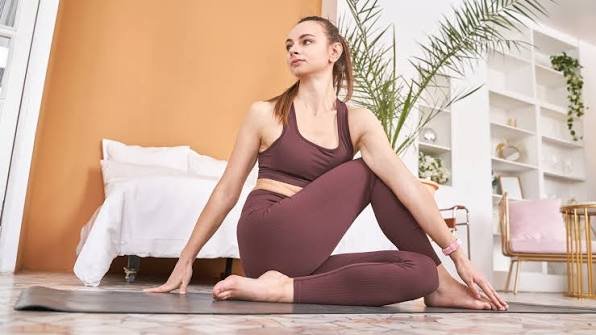
11. Supine Spinal Twist
Lying on your back, hug your right knee in, then let it fall across your body to the left while your right arm stretches out to the side. Hold for 5 breaths each side to release the lower back.
12. Corpse Pose (Savasana)
Lie flat on your back with arms and legs relaxed. Close your eyes and breathe naturally. This final relaxation helps your body absorb the benefits of your practice. Stay for 3–5 minutes.
A Simple 20-Minute Beginner Routine
| Pose | Time |
|---|---|
| Breathing in a comfortable seat | 2 minutes |
| Cat-Cow | 1 minute |
| Child’s Pose | 1 minute |
| Downward-Facing Dog | 1 minute |
| Low Lunge (each side) | 2 minutes |
| Mountain Pose | 1 minute |
| Warrior II (each side) | 2 minutes |
| Tree Pose (each side) | 2 minutes |
| Cobra Pose | 1 minute |
| Bridge Pose | 1 minute |
| Seated Forward Bend | 1 minute |
| Supine Twist (each side) | 2 minutes |
| Corpse Pose | 3 minutes |
Try this routine 3–4 times a week. As you get more comfortable, hold each pose a little longer or add a second round.
Tips for Practising Yoga Safely at Home
- Never force a stretch. Mild tension is fine; sharp pain is a signal to stop.
- Practise on an empty stomach, or wait 2–3 hours after a heavy meal.
- Use props freely. Cushions and blocks make poses easier and safer.
- Be consistent, not intense. Ten minutes daily beats one long session a week.
- Talk to a doctor first if you are pregnant, have high blood pressure, back or joint problems, or are recovering from an injury.
Common Beginner Mistakes
- Holding the breath during difficult poses.
- Comparing yourself with advanced practitioners online.
- Locking the knees or elbows.
- Skipping the warm-up and final relaxation.
Frequently Asked Questions
How often should beginners do yoga at home?
Three to four sessions of 15–30 minutes per week is a great start. Short daily practice is even better once it becomes a habit.
Can I learn yoga at home without a teacher?
Yes. Many people start with simple poses, online videos and guides like this one. Taking an occasional class or getting feedback from a qualified teacher can help you improve your alignment.
What is the best time of day to do yoga?
Any time that fits your schedule. Morning yoga can energise you for the day, while evening yoga helps you unwind and sleep better.
Final Thoughts
Starting yoga for beginners at home is one of the easiest ways to feel healthier, calmer and more flexible. Begin with a few simple poses, focus on your breathing and be patient with your body. With regular practice, you will be surprised how quickly you progress.
Disclaimer: This article is for general information only and is not a substitute for professional medical advice.